

I started carrying Mack's Pillow Soft Silicone Earplugs after a nine-hour flight to Reykjavik where the guy behind me snored louder than the engines, and the foam plugs I'd shoved in my bag as an afterthought had already gone soft and useless by hour three. I bought the 12-pair box at a pharmacy layover in Boston mostly out of desperation, not research. That was the start of a full travel season, four months, eleven flights, six hostels, and one memorably thin-walled Airbnb above a bar in Lisbon, where this little tan putty ball never left my dopp kit. This isn't a review written after one good night's sleep. It's what I think after actually working through most of a box, running low, and ordering a second one before a trip to Portugal because I didn't want to risk running out.
My old system was foam plugs from a gas station three-pack, the orange cylinder kind you roll and shove in fast. They worked for maybe one night before they'd get grimy, lose their roll-and-expand snap, or just fall out because they never actually matched the shape of my ear canal. Mack's works differently. It's moldable silicone putty, not foam, so instead of rolling it thin and letting it expand inside your ear canal, you warm a small ball in your fingers and press it over the opening of your ear like a dome. It doesn't go inside the canal at all. I wanted to know if that difference actually mattered for a real travel season, or if it was just a different shape doing the same mediocre job.
The Quick Verdict
After a full travel season and two boxes, Mack's earns its spot in my dopp kit for consistent noise blocking without canal irritation, though each ball only holds up for a handful of uses before it needs replacing, so calling it 'reusable' the way people mean with silicone Loop-style plugs oversells it.
Amazon Check Today's Price →Tired of Foam Plugs That Quit Working by Hour Three?
I used to shove in gas-station foam and hope. A pack of moldable silicone that actually seals over the ear instead of inside it got me through eleven flights and six hostels without a single sleepless night from noise.
Amazon Check Today's Price on Amazon →How I've Used Them
I keep the little plastic travel case clipped to the inside pocket of my dopp kit, so it's never buried at the bottom of a bag when I need it at 11pm in an unfamiliar room. Over four months I used them on eleven flights, most of them red-eyes or early departures where I actually wanted to sleep rather than just tune out a seatmate's podcast. I also used them in six hostels across three countries, a noisy Airbnb in Lisbon, and at home more nights than I expected, since my partner picked up a snoring habit somewhere around month two of this test that I did not sign up for.
The routine is the same every time. Warm a ball between your thumb and fingers for about ten seconds until it goes soft and pliable, roll it into a smooth dome, pull your ear up and back slightly, and press the putty over the ear canal opening so it seals against the skin rather than pushing into the canal itself. It takes me about 20 seconds now, though the first few nights I fumbled it and ended up with a lopsided seal that let in a thin whistle of noise until I re-pressed it. Once it's seated right, it stays put through a full night of tossing and turning, which foam never managed for me.
The one habit I had to build was checking the seal with a fingertip before actually trying to sleep. On two occasions, once on a flight to Denver and once in a Lisbon hostel bunk, I pressed too quickly and left a tiny gap at the edge, and I woke up around 3am to cabin chatter or a door slamming because the seal had never been complete. Once I slowed down and pressed the full edge of the dome flat against my skin, that stopped happening.
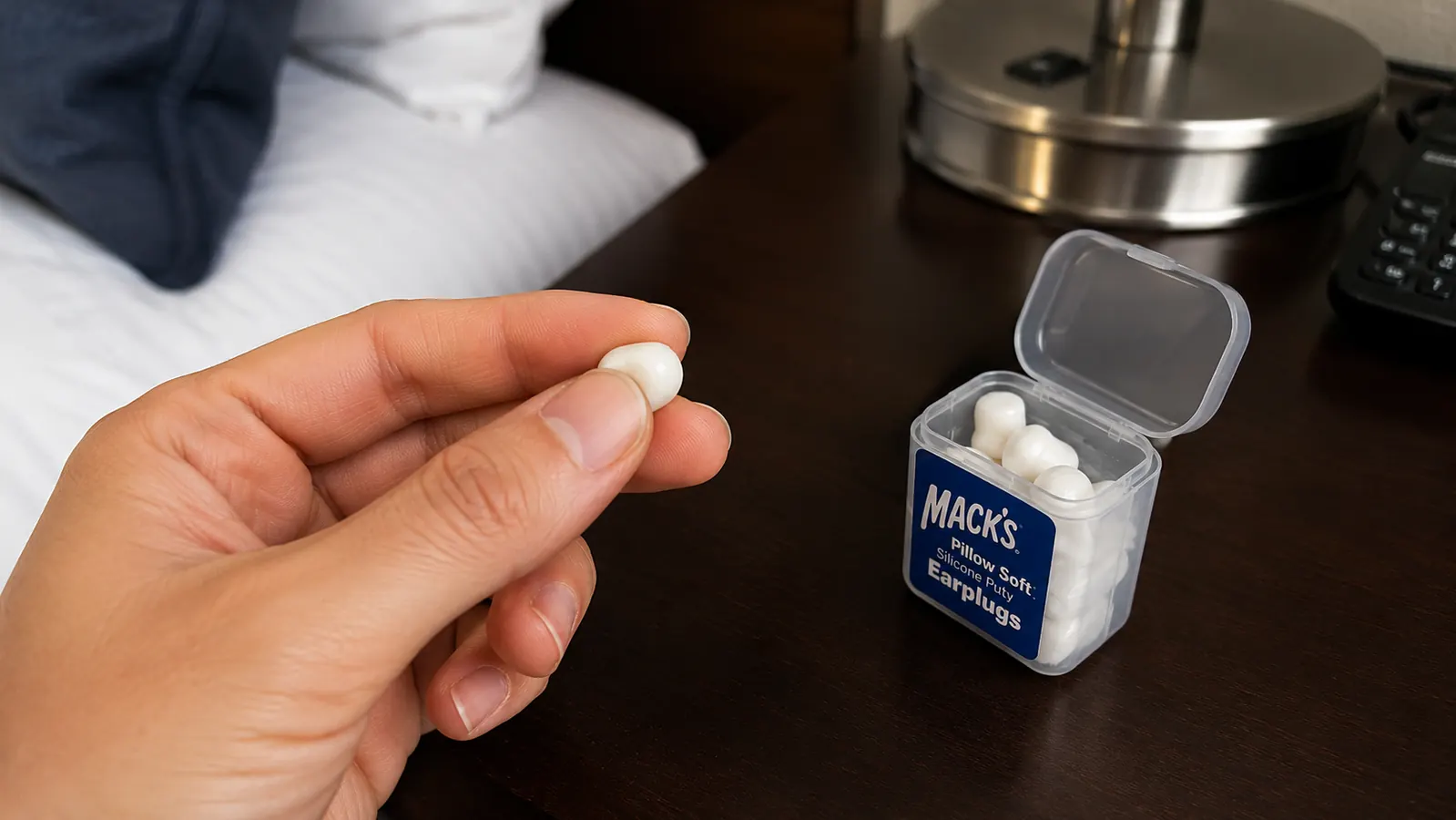
What 'Moldable Silicone' Actually Means, and Where the Reusable Claim Gets Fuzzy
I want to be straight about this because I see the word 'reusable' thrown around loosely in this category, and Mack's doesn't quite fit that label the way a silicone Loop-style plug does. Mack's is a putty. Each little ball can be reused for a handful of nights, in my experience anywhere from two to five depending on how careful I was about keeping my fingers clean and the case closed, before it starts picking up lint, hair, or enough grime from your fingers that it stops sealing cleanly and starts smelling faintly of, well, ear. At that point you toss that ball and open a fresh one from the box. That's a meaningfully different promise than a hard silicone plug you wash and reuse indefinitely for years.
In practice, this landed somewhere in the middle for me. It's not disposable-after-one-use like the cheapest foam plugs, but it's also not a buy-once-forever product. Across four months I went through roughly nine of the twelve pairs in the box, which works out to a pair lasting me around two weeks of near-nightly travel use before it degraded enough that I swapped it. If you're the type who wants a single pair of earplugs to last a full year without replacement, silicone putty like this isn't that product, and I'd rather tell you that upfront than let the word 'silicone' on the packaging imply something it doesn't deliver.
Fit and Comfort, Including One Night It Actually Failed
The single biggest upgrade over foam, for me, was comfort for side sleeping. Foam plugs sit inside your ear canal, and when I sleep on my side, which is most of the night, that pressure against the canal wall was uncomfortable enough that I'd sometimes wake up and pull one out without meaning to. Because Mack's sits over the opening of the ear rather than inside it, there's no canal pressure at all. I've fallen fully asleep on my side, woken up, and found the dome still seated exactly where I pressed it. That alone is worth the price difference over foam for anyone who isn't a strict back sleeper.
It's not flawless. On a warm night in a Lisbon hostel with no air conditioning, I sweated enough that the putty started to loosen its grip around 4am, and I woke up to find one had slid halfway off and let in the sound of someone's alarm two bunks over. That's the one real failure mode I hit in four months, and it was specifically heat and sweat related, not a fit problem. If you're someone who runs hot at night or you're traveling somewhere genuinely humid, keep that in mind, and maybe keep a fresh ball within reach rather than assuming one seal will hold through a sweaty night.
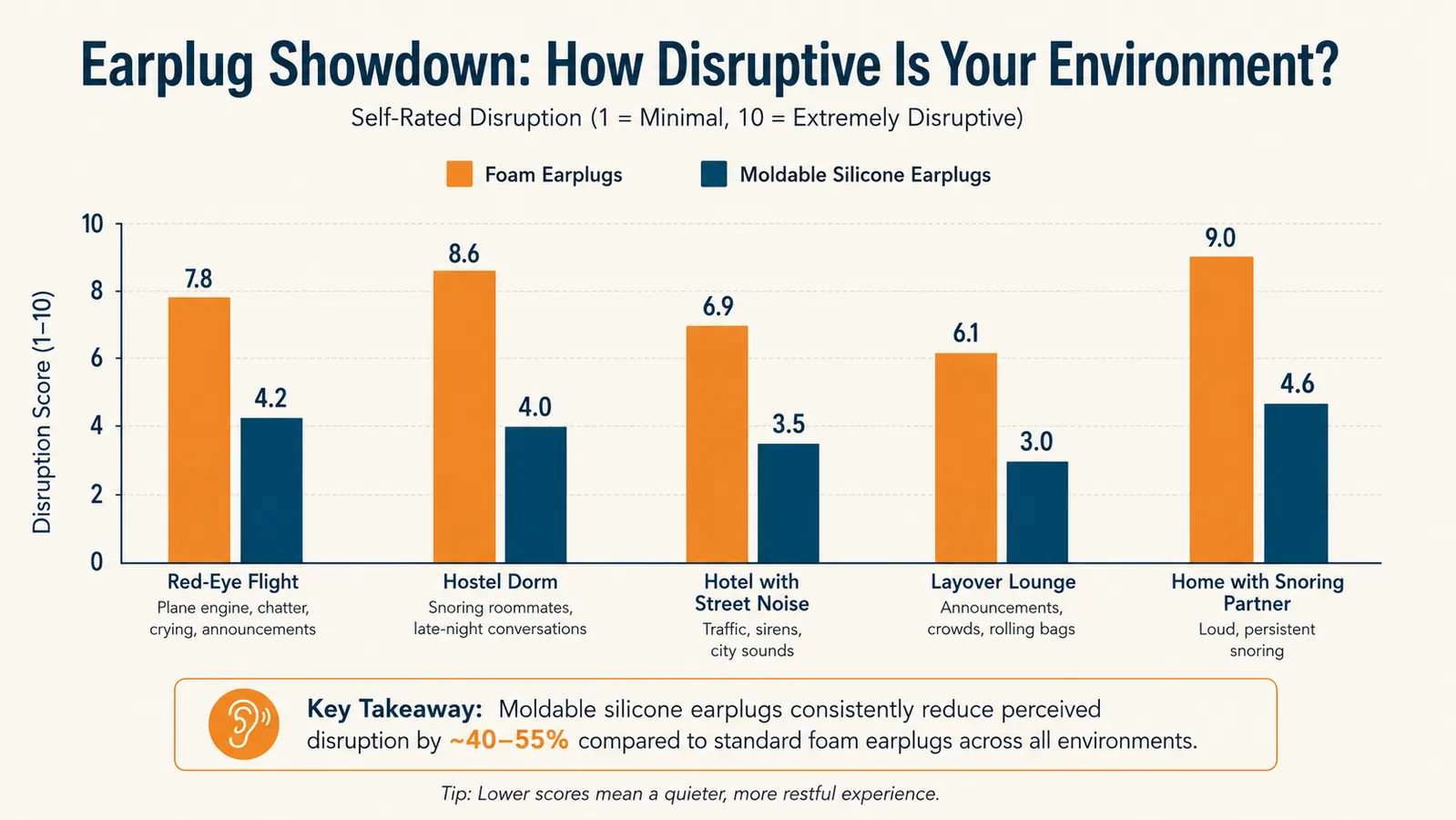
Noise Reduction in the Places That Actually Matter
Mack's carries a noise reduction rating around 22 decibels on the packaging, and while I don't have a decibel meter in my carry-on, I can tell you what it blocked in real conditions. On the flight to Reykjavik that started this whole test, it took the seatmate's snoring from an active annoyance down to a distant hum I could ignore. Engine noise dropped to a soft, steady drone rather than the dull roar I'd get with nothing in. It did not fully eliminate a crying infant two rows up on a flight to Chicago, nothing short of noise-canceling headphones probably could, but it took the edge off enough that I could actually doze.
In hostels, it handled dorm-mate snoring and hallway chatter well. It struggled more with sharp, sudden sounds, a door slam, a dropped suitcase, than with the steady drone of an air conditioner or highway traffic outside a hotel window. That's consistent with how these plugs are designed to work, they attenuate continuous noise better than they block a single loud spike, which is worth knowing if your main noise problem is a specific loud event rather than constant background sound.
The Travel Case, TSA, and Keeping a Box Fresh for Four Months
The 12-pair box comes with a small hinged plastic case about the size of a matchbox, and it became one of those unglamorous items I never once questioned packing. It cleared security every time without a second look, since it's neither a liquid nor anything that reads as suspicious on an X-ray, and I never got pulled aside for it in eleven flights across four airports. I did learn to snap the lid fully shut after grabbing a pair, because one loose latch in a jacket pocket let lint and a stray thread work into two balls before I noticed, and I had to toss both a night earlier than I would have otherwise.
Keeping the box fresh over four months mostly came down to hand hygiene, which sounds obvious but matters more than I expected. On trips where I was diligent about washing my hands before opening the case, pairs lasted closer to five uses. On a stretch of rushed early flights where I was grabbing a ball half asleep with whatever was on my fingers, I burned through pairs faster, closer to two uses each. That's the one variable that's actually in your control with this product, and it's worth building the habit if you want to stretch a box across a longer trip.

What Else I Considered Before Committing to Silicone
Before this trip, I tried a pair of Loop-style hard silicone plugs a friend recommended, the kind marketed as truly reusable and washable. They fit well for a night or two, but I found the hard plastic shell uncomfortable pressed against my ear when side sleeping on an airplane headrest, and cleaning them properly on the road, in an airport bathroom or a hostel sink, felt like more maintenance than I wanted to deal with at 11pm after a delayed flight. Mack's requires zero cleaning between uses within its short lifespan, you just warm and press a fresh ball when the old one stops sealing well, and that low-maintenance factor mattered more to me while actually traveling than it did when I was reading reviews at home.
I also considered just sticking with foam and buying a fresh pack before every trip. That's cheaper per pair, but I was consistently annoyed by how quickly foam degraded, sometimes within a single night, and by the canal pressure that kept waking me up on my side. The tradeoff with Mack's is that you're paying a bit more per box and accepting that a pair won't last forever, in exchange for a seal that's more comfortable and, in my experience, more reliable through a full night.
What I Liked
- Seals over the ear instead of inside the canal, genuinely more comfortable for side sleepers
- Held up through eleven flights and six hostels without needing to be replaced constantly
- No cleaning required between uses, just warm and press a fresh ball from the case
- Handles steady noise like engine drone, snoring, and traffic well
- Small travel case fits easily in a dopp kit or jacket pocket
Where It Falls Short
- Not truly reusable long-term, each ball loses its seal after roughly two to five uses
- Can loosen and slide on hot, sweaty nights, one failure in four months for me
- Weaker against sudden sharp sounds like a door slam than against constant background noise
- Went through nine of twelve pairs in four months, so a box doesn't last a full year of regular travel
It's not a plug you buy once and forget about. It's a plug you keep buying because it actually works, and after a full travel season I've made my peace with that tradeoff.
Who This Is For
If you're a side sleeper who's given up on foam because of canal pressure, or you travel often enough that you want something you can press in fast at 11pm without a cleaning routine, Mack's is an easy recommendation. It's also a solid pick for anyone dealing with a specific recurring noise problem, a snoring partner, a noisy street-facing hotel room, engine drone on long flights, since it handles steady background noise reliably.
Who Should Skip It
If you want a single pair of earplugs that lasts a full year without replacement, or you're specifically trying to avoid buying consumables on a recurring basis, a hard silicone or filtered reusable plug will serve you better even if it's less comfortable for side sleeping. It's also not the strongest choice if your main noise problem is sudden, sharp sounds rather than continuous background noise, since that's where I noticed it struggle most.
A Full Travel Season In, I Still Reach for the Case Every Night
No canal pressure, no cleaning routine, just warm, press, and sleep. If foam has let you down on a red-eye or in a thin-walled hostel, this is the swap I'd make first.
Amazon Check Today's Price on Amazon →