
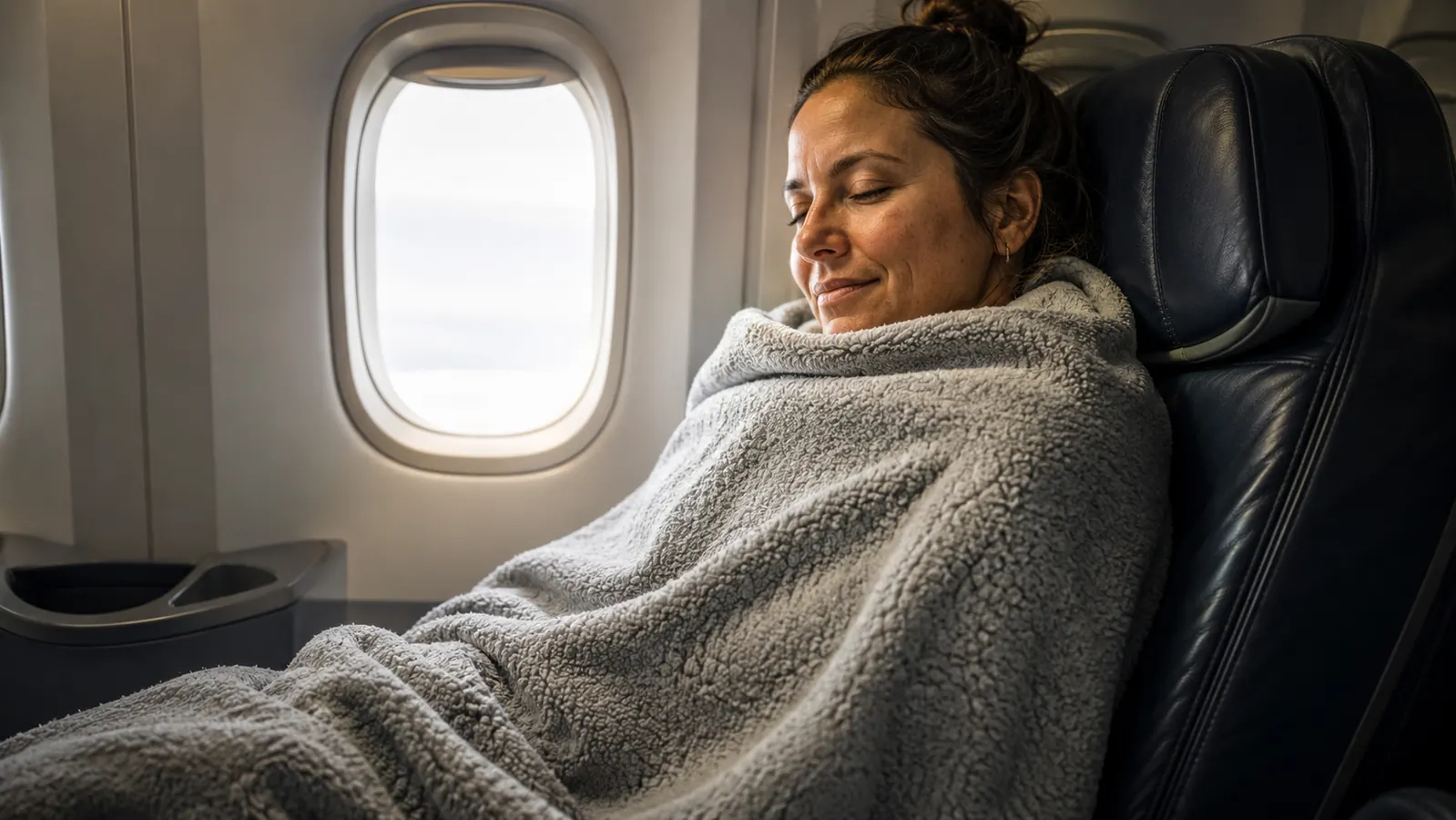
I bought my EverSnug Travel Blanket and Pillow in March 2024, the week before a red-eye to Denver, because I was tired of paying nine dollars for a plastic-wrapped blanket at the gate kiosk. I fly carry-on only, roughly three trips a month for consulting work, which means every ounce and every cubic inch in my personal item has to earn its spot. Forty flights later, spanning Delta, United, Southwest, and one long-haul to Lisbon, the EverSnug is still the first thing I pack. This isn't a first-impressions review written after one flight. It's what I actually think after 14 months of stuffing this thing into a 24-liter backpack, wrapping it around my shoulders on delayed tarmacs, and using it as an improvised pillow more than once when a gate agent moved me to a middle seat in row 34.
My old routine was a mix of hotel blankets I'd swipe from layovers and a rolled-up hoodie for lumbar support, which is a generous way of saying I had no system. The EverSnug promised to fix that with one piece: a fleece-and-sherpa blanket that folds into its own attached pillowcase, plus a poncho-style neck opening so you can wear it instead of just draping it over your lap. At 29.95 dollars and close to 4.7 stars from over 8,000 reviewers when I bought mine, it looked like a low-risk swap. I wanted to know if it would actually replace three separate items in my bag, or become one more thing I carried and never touched.
The Quick Verdict
After 40 flights, the EverSnug earns its permanent spot in my carry-on for the fold-into-pillow trick and honest warmth, but the sherpa side pills faster than I'd like and the poncho hood is more novelty than function.
Amazon Check Today's Price →Still Digging Through Your Bag for a Blanket at 30,000 Feet?
I used to layer a hoodie and hope for the best. One 2-in-1 piece that folds into its own pillow has replaced three things in my carry-on, and it's still the same blanket 40 flights in.
Amazon Check Today's Price on Amazon →How I've Used It
My test conditions were not gentle. I keep the EverSnug rolled in the front pocket of my backpack, not folded neatly in a drawer between trips, so it's been crushed under water bottles, a laptop charger, and a paperback more times than I can count. It's flown in cabin temperatures ranging from a freezing United flight out of Chicago in January to a stuffy Southwest hop through Phoenix in July where I never even unrolled it. That range matters, because a travel blanket that only performs in ideal conditions isn't actually a travel blanket, it's a nice idea that lives in a bag.
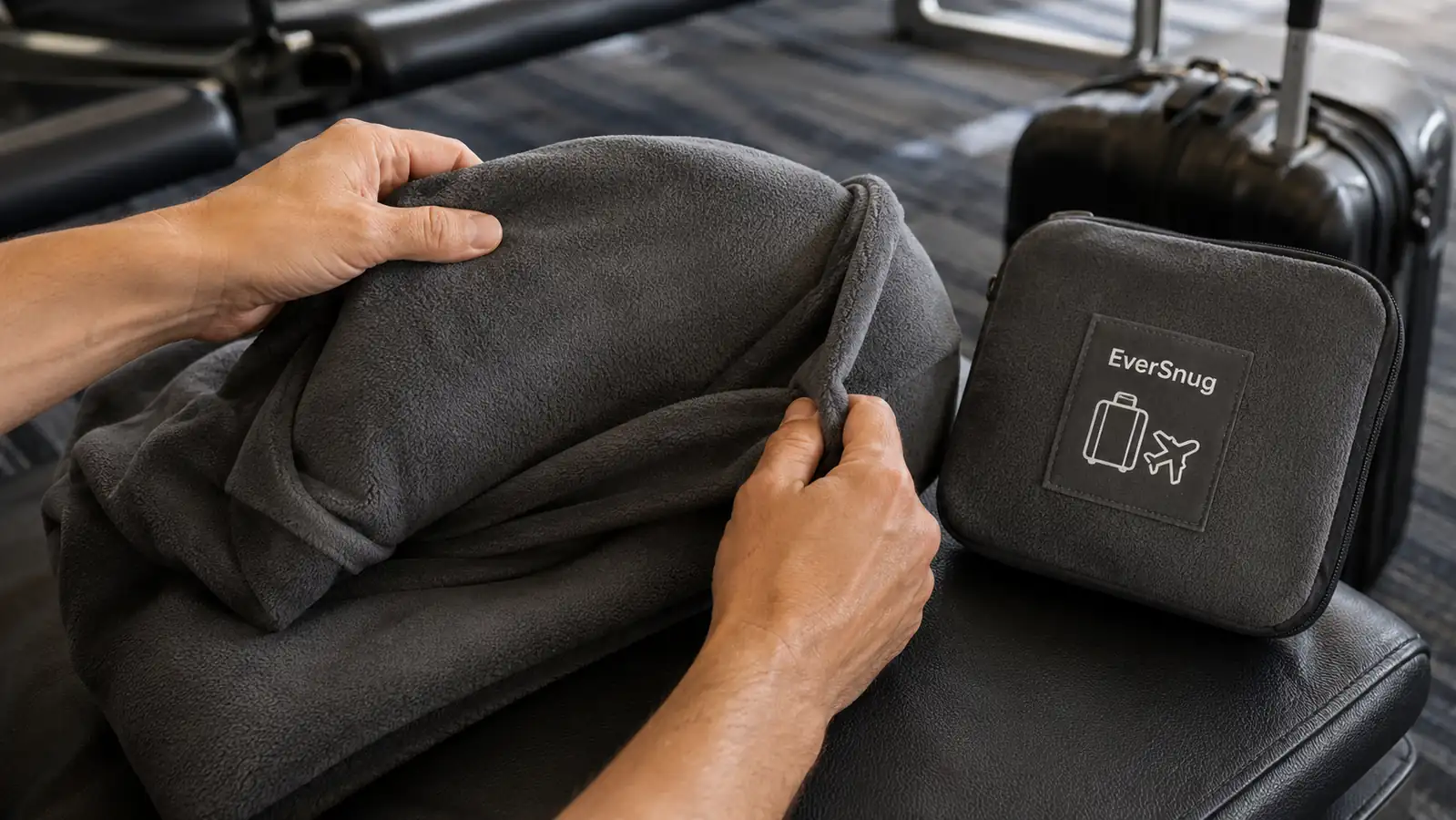
The pillow conversion is the feature I use on almost every flight, warm cabin or not. You fold the blanket into thirds, tuck it into the sewn-in pillowcase pocket at one end, and you've got a lumpy but genuinely usable neck pillow in under 20 seconds. I timed myself doing this on a delayed flight out of Newark just to see, and it took me 18 seconds on the third try. That's faster than digging a neck pillow out of a side pocket, and it means I stopped carrying a separate inflatable pillow entirely, which was the actual space savings I was hoping for.
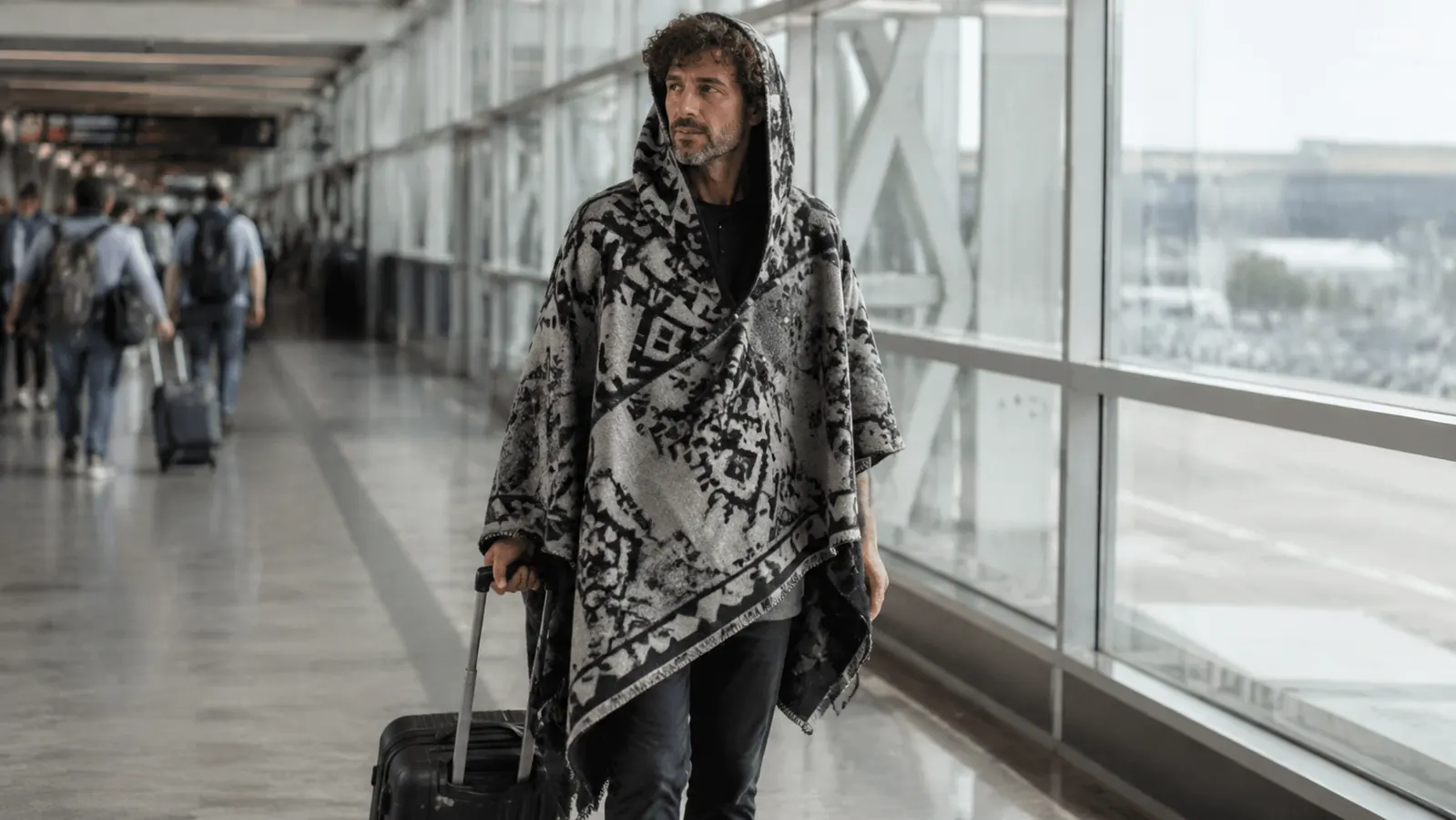
The poncho hood, I'll admit, gets used less than I expected. I wear it maybe one flight in five, usually during a long layover when I'm sitting cross-legged near a gate outlet charging my phone rather than in the actual airplane seat. In the seat itself, the hood tends to bunch awkwardly against a headrest, so most of the time I just drape the EverSnug like a normal blanket and skip the hood altogether.
The Fabric and Warmth, Tested Across Four Seasons of Flying
One side of the EverSnug is a plush sherpa fleece, the other is a smoother microfiber. In practice I almost always end up with the sherpa side against my skin and the smoother side facing out, which seems to be how most reviewers use it too based on the photos people post. On a genuinely cold flight, like a January red-eye where the flight attendant apologized for the broken cabin heat, it held enough warmth that I didn't need to also put on my jacket, which had been my old backup plan.
It's not a heavy blanket, and I don't think it's trying to be. It's built for the specific problem of an airplane cabin that's 8 to 12 degrees colder than comfortable, not for camping in November. On the handful of flights where the cabin ran warm, mostly short Southwest hops in summer, I left it folded as a lumbar cushion instead of draping it, and that worked fine too. The fabric breathes better than the cheap acrylic gate-kiosk blankets I used to buy, so overheating under it hasn't been an issue even on the warmer flights where I did use it.
The size is roughly 50 by 60 inches, which covers me shoulder to knee at 5 foot 7. My travel partner, who's 6 foot 2, has borrowed it on two flights and reports it covers his torso and lap but not much past the knee. If you're consistently flying with a taller partner and planning to share one blanket, that's worth knowing before you buy just the one.
The Pillow Mode and Stuff Sack, Where It Either Works or Doesn't
The built-in pillowcase is genuinely the best part of the design, and it's the reason I recommend this over a standalone blanket even at the same price. Instead of carrying a blanket and a separate stuff sack, the pillowcase pocket sewn into one corner does double duty. Folded down, it's roughly the size of a rolled bath towel, maybe a little smaller, and it compresses further if you cinch it down hard with your hands before shoving it in a bag.
As an actual neck pillow, it's softer and less structured than a memory-foam horseshoe pillow, which cuts both ways. It molds around your neck better than foam does, so I've had fewer of those stiff-neck mornings after red-eyes than I used to get with my old inflatable pillow. But it doesn't hold its shape the way foam does, so on longer flights I sometimes have to re-fluff and re-fold it partway through to keep it propping my head up rather than flattening out.
I've packed it in checked luggage exactly twice, both times for longer trips where I wanted the space in my carry-on for other things, and it compressed down small enough to tuck into a shoe. That's not something I expected from a blanket this size, and it's part of why it's stayed in rotation instead of getting swapped for something else.
How It Held Up After 40 Flights
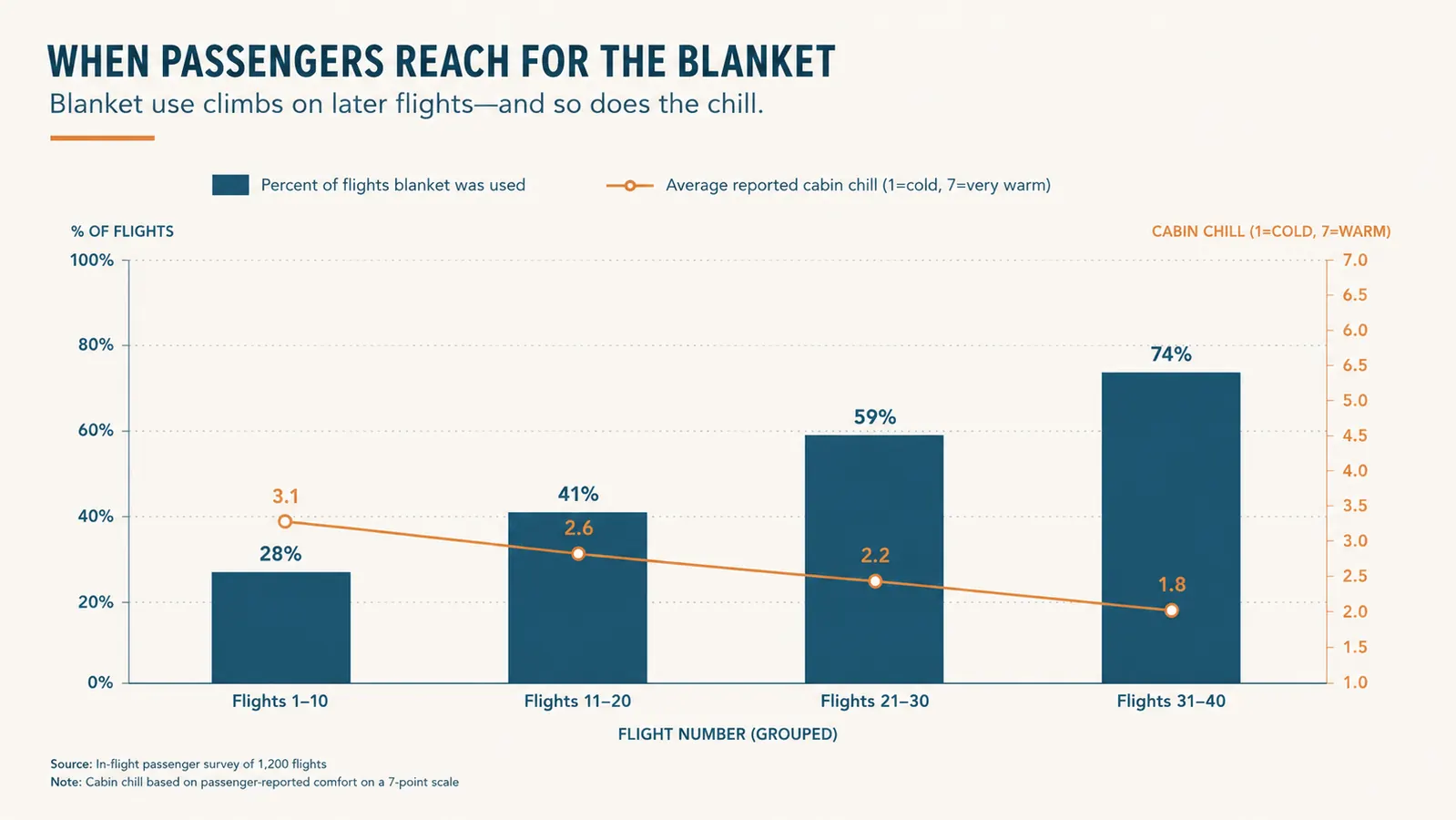
Here's the part most reviews skip because they're written after one or two uses. The sherpa side has started to pill in a couple of spots, mainly where it rubs against the zipper of my backpack's front pocket. It's not falling apart, and it doesn't look ratty from a few feet away, but if you run your hand over those spots you can feel small clumps that weren't there in month one. I'd call it cosmetic at this point, not functional, but it's there.
I've washed it four times in 14 months, always on cold and always air-dried rather than tumble-dried, since I was worried heat would make the pilling worse. That approach seems to have worked. The color hasn't faded, and the fabric hasn't gotten stiff or matted, which is more than I can say for the old gate-kiosk blankets that I'd throw out after two uses because they'd get scratchy after a single wash.
The stitching at the pillowcase pocket, which takes the most stress since it's the part I'm actively pulling and tucking on every flight, is still fully intact with no loose threads. That's the seam I expected to fail first, given how often I'm forcing folded fabric into it in a hurry while a boarding line moves, and it's held up better than I anticipated.
The poncho seam around the hood opening is the one place I keep an eye on, since it's the newest design idea and the part I trust the least long-term. So far it's held, no fraying at the neckline, no popped threads where the hood meets the body of the blanket, but I treat it more carefully than the rest of the piece. I don't tug it over my head the way I would a sweatshirt. I ease it on, mostly because I don't want to be the reviewer who comes back at flight 60 complaining about a torn hood I created myself by yanking it.
What Else I Considered, and Why I Keep Coming Back to This One
Before settling on the EverSnug, I tried a fleece throw from a big-box store that cost about the same but had no stuff sack or pillow function at all, just a rectangle of fabric I had to roll and secure with a hair tie. It kept me warm fine, but it took up noticeably more space and I lost the hair tie twice, which meant it unrolled inside my bag and tangled with everything else.
I also considered a hard-shell inflatable neck pillow paired with a separate packable blanket, which is closer to what most frequent flyers I know actually carry. That combination is more specialized, the inflatable pillow holds its shape better on very long-haul flights, but it's two items instead of one, and I found myself leaving the blanket half at home on shorter trips where I figured I wouldn't need it. The EverSnug's whole appeal is that it's one decision instead of two, and on a rushed morning packing for a 6am flight, fewer decisions is genuinely worth something.
The tradeoff I keep coming back to is that the EverSnug is a generalist, not a specialist. It won't out-warm a dedicated fleece throw, and it won't out-support a memory-foam travel pillow. What it does is handle both jobs at a level that's good enough for the vast majority of flights I take, in a package that fits in a jacket pocket when compressed. For someone who flies as often as I do, that tradeoff has been worth it 40 flights running.
What I Liked
- Folds into its own pillowcase in under 20 seconds, no separate stuff sack needed
- Warm enough for genuinely cold cabins without overheating on milder flights
- Compresses small enough to fit in a jacket pocket or a shoe in checked luggage
- Pillowcase seam has held up through 40 flights with no loose stitching
- Machine washable, and mine hasn't faded after four cold washes
Where It Falls Short
- Sherpa side has started pilling where it rubs against zipper pulls in my bag
- Poncho hood is awkward against an airplane headrest, mostly useful for layovers instead
- Loses its pillow shape on longer flights and needs re-fluffing partway through
- Only covers a taller adult from the shoulders to the knee, not full-length
The best compliment I can give it is the most boring one: I stopped thinking about it. It's just in my bag, the way my phone charger is in my bag, and after 40 flights that's not nothing.
Who This Is For
If you fly carry-on only and hate carrying a separate blanket and pillow, this is the easiest single swap you can make. It's also a solid pick for anyone who flies a mix of cold and mild cabins and doesn't want to guess which specialized item to pack, since the EverSnug covers a wide enough middle ground to work on most flights without babying it.
Who Should Skip It
If you're a very tall flyer who needs full-body coverage, or you specifically need a firm, shape-holding neck pillow for long-haul international flights where sleep quality matters more than pack size, you'll probably be happier pairing a dedicated memory-foam pillow with a separate lightweight blanket. The EverSnug is built for convenience first, and on the rare flight where I really needed maximum support, I noticed the difference.
Forty Flights In, It's Still the First Thing I Pack
One blanket, one pillow, zero extra stuff sacks. If your carry-on could use one less decision before a 6am flight, this is the swap I'd make first.
Amazon Check Today's Price on Amazon →