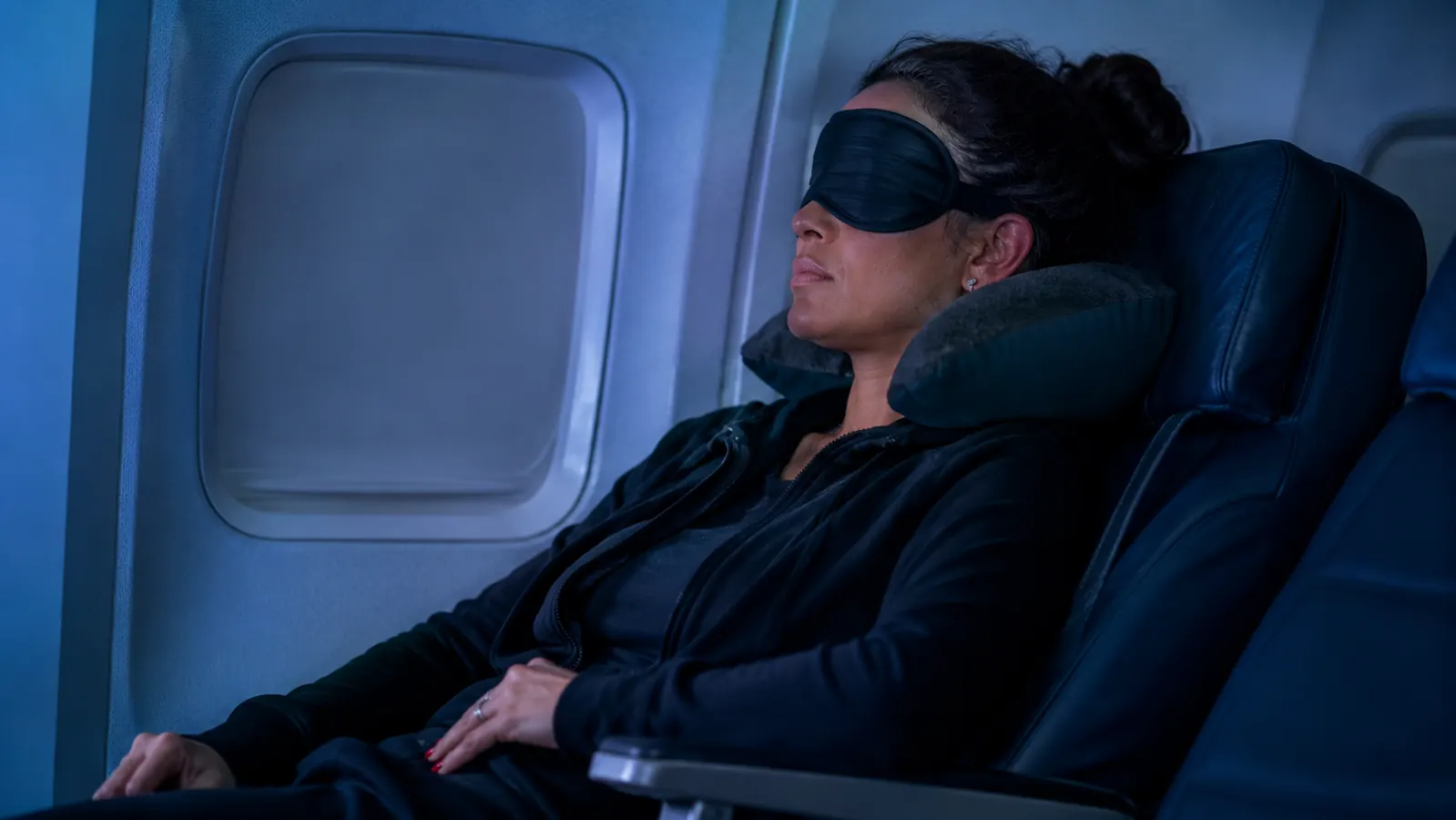
Red-eye flights promise you'll land refreshed and skip a hotel night. Almost nobody actually pulls that off. I used to be the person hunched against the window with my head bobbing every time the plane hit a pocket of chop, waking up every twenty minutes with a stiff neck and a headache that followed me straight into my first meeting. The problem was never that I couldn't sleep on planes. It was that I was trying to sleep with cabin lights leaking in from three angles, a seatback screen glowing four rows up, and a flimsy paper-thin mask that let light bleed in around my nose the second I turned my head. Once I started flying with a YIVIEW 3D contoured sleep mask instead of the flat eye covers hotels hand out at checkin, red-eyes stopped being something I dreaded. This is the exact routine I run now, built around that mask, to actually fall asleep on an overnight flight instead of just closing my eyes and hoping.
None of this is complicated. It's five steps I go through on every red-eye, whether it's the short hop from Newark to Denver or the long haul home from Lisbon. Skip one and the whole system gets shakier, mostly because red-eye sleep is fragile. One stray beam of light from the galley or one cold blast from the overhead vent and you're back to staring at the seatback flight map at 2am. The mask does the heaviest lifting in this routine, but it only works if you set it up right and pair it with a few habits most travelers skip entirely.
I used to think the mask was the whole solution by itself, and for years I bought whatever three-pack was cheapest at the airport kiosk. That's the mistake. A mask is one piece of a system that also includes seat position, sound, and timing, and if you only fix the light problem you're still fighting the other three. This guide walks through all five pieces in the order I actually do them, starting the moment I sit down and ending when the cabin lights come back up before landing.
Stop Fighting Cabin Light for Six Straight Hours
The YIVIEW 3D Sleep Mask blocks light completely without pressing on your eyelids or smearing your lashes against the fabric, so you can actually close your eyes and keep them closed. Check today's price on Amazon before your next overnight flight.
Amazon Check Today's Price on Amazon →Step 1: Pick a Mask That Doesn't Touch Your Eyelids
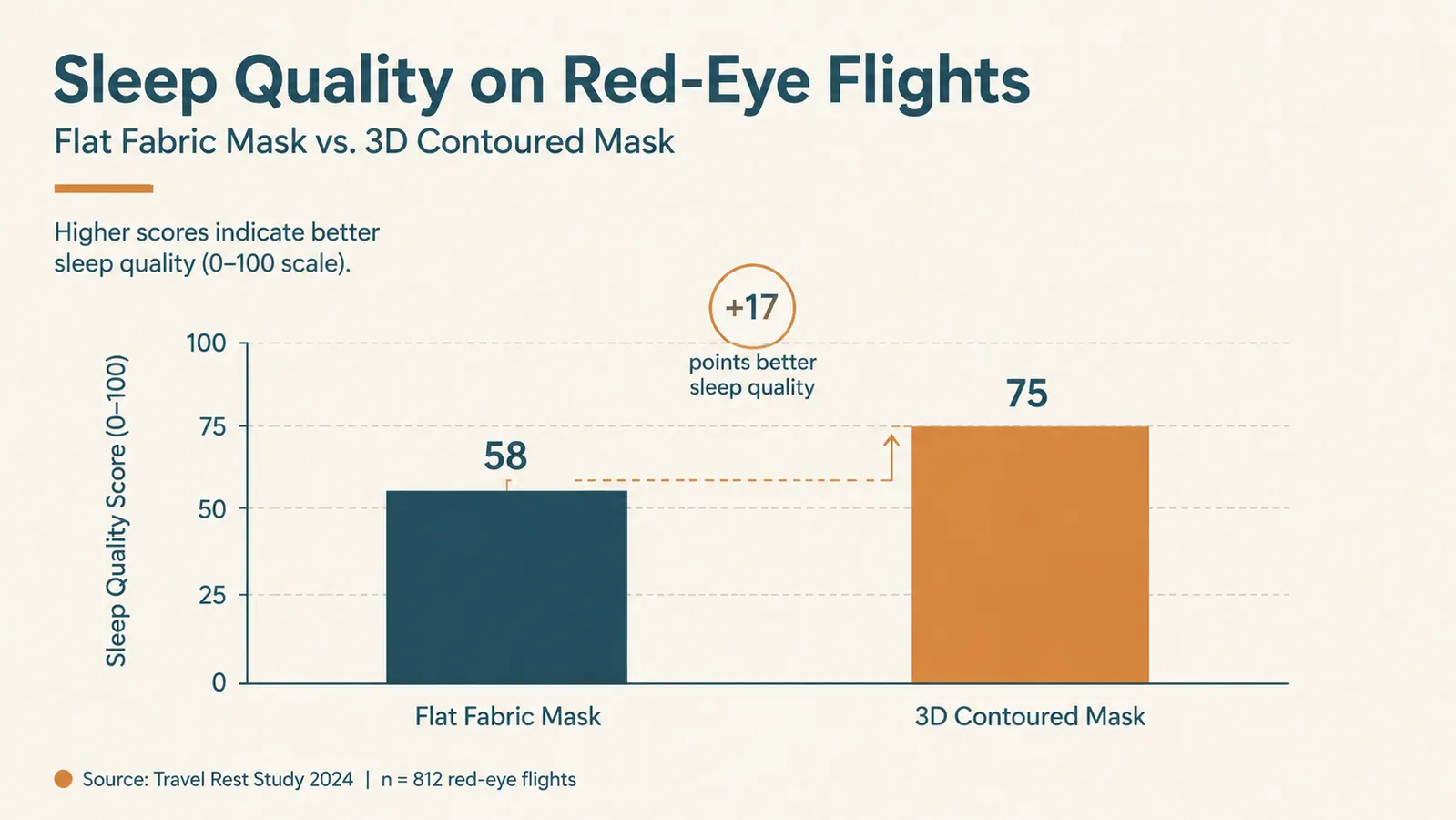
This is the step that actually matters and most people get it wrong before they even board. A flat sleep mask, the kind airlines hand out or hotels leave on the nightstand, presses a thin layer of fabric directly against your eyelids. Every time you blink or your eyes move under closed lids, which happens constantly during REM sleep, that fabric drags. Your body registers it as irritation and pulls you halfway out of sleep without you ever knowing why. A 3D contoured mask like the YIVIEW solves this by curving away from your face, leaving a small hollow chamber over each eye so you can blink and even open your eyes slightly without touching anything.
It also matters for anyone who wears makeup, because a flat mask smears mascara and eyeliner across your face by the time you land, and I've dealt with that embarrassment walking off a red-eye into a client meeting more than once. The contoured design keeps the fabric off your skin entirely, so you land looking like you slept in a bed instead of a middle seat.
Material matters too. The breathable fabric on the YIVIEW doesn't trap heat against your face the way a foam-padded mask does, which I noticed most on longer flights where the cabin warms up mid-flight. A mask that gets sweaty by hour three wakes you up just as fast as one that leaks light, so breathability isn't a nice-to-have, it's part of why the mask stays on all night instead of getting yanked off in your sleep.
Step 2: Fit It Before the Cabin Lights Go Down
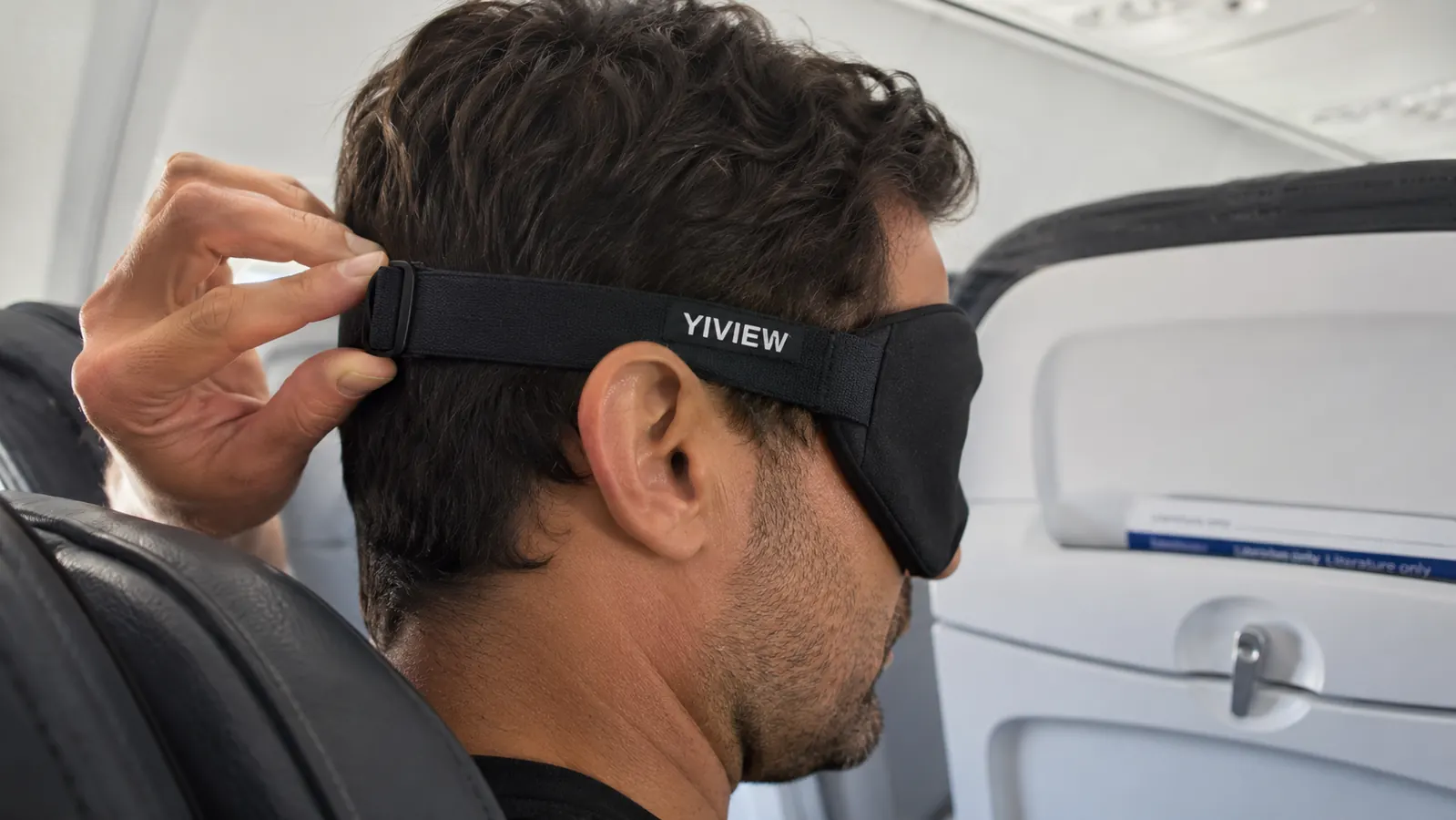
Don't wait until the flight attendants dim the cabin to put your mask on for the first time. I put mine on right after the seatbelt sign turns off for cruising and adjust the strap while the lights are still up, so I can actually see what I'm doing. Pull the strap snug enough that it doesn't slide down your nose when you tilt your head, but not so tight that it leaves a headache-inducing pressure line across your temples. The YIVIEW's strap has enough give that you can adjust it one-handed without taking the whole mask off, which matters because you'll likely need to readjust once or twice after you've settled into your actual sleeping position.
Check the nose bridge too. Most contoured masks have a soft foam or fabric section that curves to block light from sneaking in underneath, right where your nose meets your cheekbones. That's the number one leak point on a bad mask. Press it gently against the bridge of your nose and confirm no light gets through when you look toward the window or the aisle light.
I keep mine in the seatback pocket rather than my bag once the flight boards, so it's the first thing my hand finds instead of digging through headphones and a paperback at cruising altitude. A three-pack like the YIVIEW also means I leave a spare in my everyday carry-on permanently, so I'm never scrambling at the gate when a flight gets rebooked onto a later red-eye.
Step 3: Pair the Mask With the Right Seat Position
A great mask still can't fix a bad sleeping position. I recline as far as the seat allows the moment cruising altitude hits, angle my body slightly toward the window even in an aisle seat, and use a small travel pillow to support the side of my neck rather than the back of it, since most of us tip forward or sideways when we actually fall asleep, not backward. The mask stays put through this because the contoured shape doesn't shift when your head rolls to one side, unlike a flat mask that rides up and exposes one eye the second you turn.
If you're in a window seat, close the shade completely before you put the mask on, not after. It sounds obvious, but I've watched seatmates fumble with a half-open shade at 1am trying not to wake the row behind them. Handle it early, mask on, shade down, and you've removed the two biggest light sources before you even try to sleep.
Aisle seats are trickier because the cart traffic and cabin walk-throughs happen right next to your shoulder. I angle my knees toward the window side and lean into the headrest at a diagonal rather than sitting bolt upright, which keeps my face turned away from the aisle light every time someone walks past. Small adjustment, noticeable difference over a six-hour flight.
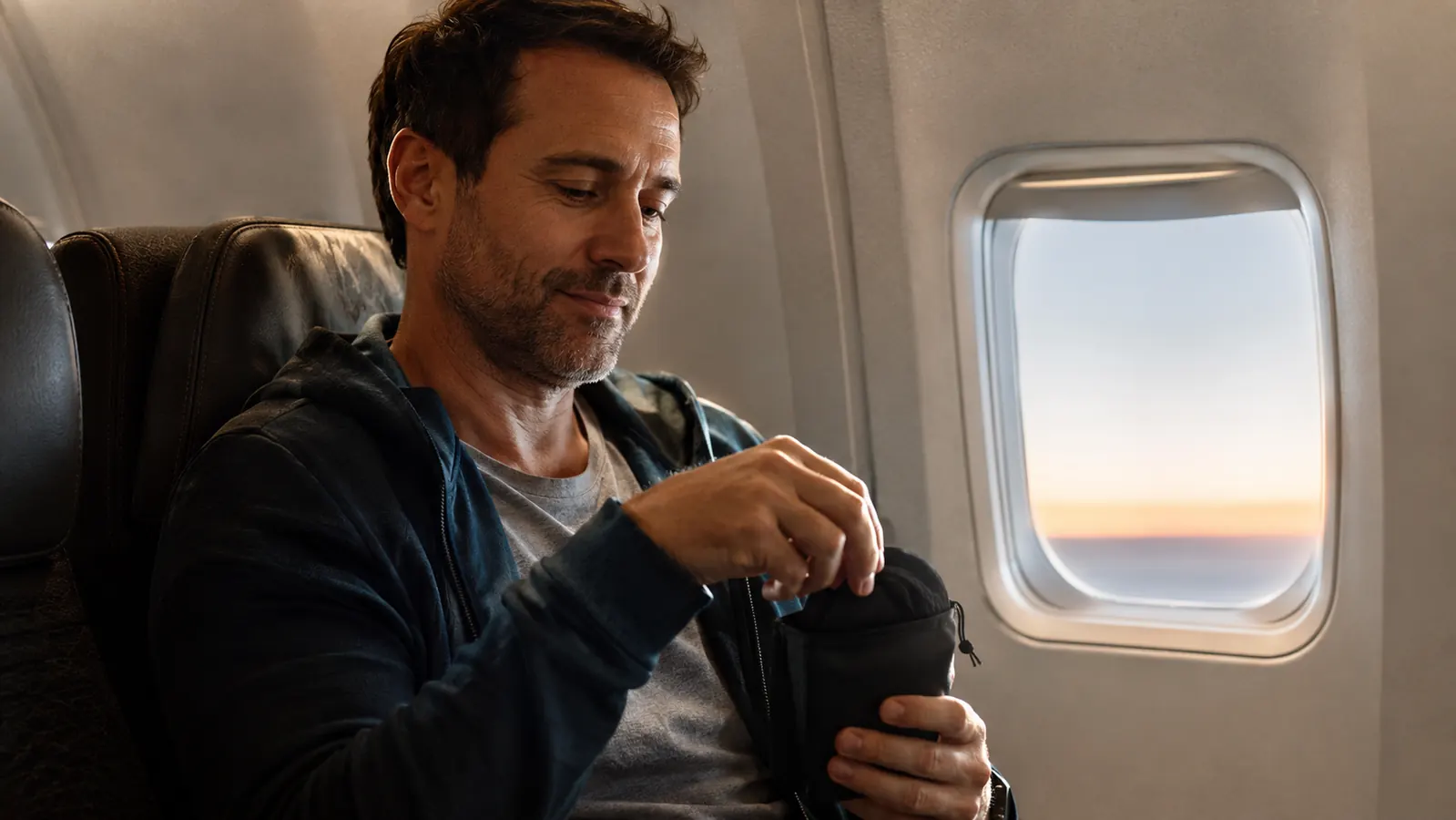
Step 4: Block Sound Before You Block Light
Light isn't the only thing keeping you awake on a red-eye. Engine drone, a crying infant three rows up, the beverage cart rattling down the aisle at exactly the wrong moment, all of it chips away at whatever sleep the mask helps you find. I pair mine with a set of soft foam or moldable earplugs every single time, and the difference is bigger than most people expect. It's not about total silence, it's about smoothing out the sharp, sudden noises that jolt you awake, the ones a mask alone can't touch.
Put the earplugs in first, then the mask, so you're not fumbling with two things at once once you're already comfortable. This two-step layering, ears then eyes, is the single biggest upgrade I made to my red-eye routine after years of just wearing a mask and hoping the noise wouldn't matter.
If you fly with headphones instead of earplugs, keep the volume low and pick something ambient rather than a podcast, since spoken word actually keeps your brain more alert than white noise or a soft instrumental track. Either way, get whatever you're using into place before the mask goes on, not after, so the mask isn't fighting a headphone band for real estate on your head.
Step 5: Time Your Mask to the Flight, Not the Clock
Here's the part people get backward. Don't put the mask on based on what time it is at home. Put it on based on when the cabin actually goes dark and stays dark, which the flight crew controls, not your body clock. On a westbound red-eye, that might mean keeping the mask off for the first hour while dinner service happens, then committing fully once the lights drop. Trying to force sleep before the cabin settles just means you're lying there awake under a mask, which is worse than staying alert with your eyes open.
I also keep the mask around my neck, not stuffed in my bag, for the last hour before landing. Red-eyes often have a second light phase before descent when the crew turns the cabin lights back up for breakfast service, and having the mask handy to push back up over your eyes for another twenty or thirty minutes of dozing has saved more than a few groggy mornings for me.
This same timing logic works off the plane too. I use the same mask for daytime naps during long layovers or jet lag recovery in a hotel room with thin curtains, since the whole point is blocking light on your schedule, not the sun's. A mask that only works in a dark bedroom isn't much use to a traveler, which is another reason a proper contoured one earns a permanent spot in my bag instead of living in a drawer at home.
What Else Helps
A good mask and a pair of earplugs cover the two biggest sensory disruptions on a red-eye, but a few smaller habits round out the routine. I keep the overhead vent pointed away from my face since cold air on your forehead is a surprisingly effective way to stay awake. I skip the second coffee at the gate, obviously, and I avoid alcohol in flight even though it feels like it should help. It fragments sleep worse than staying sober, something I learned the hard way after a wine-assisted red-eye that left me more exhausted than if I'd just stayed awake and read. Last, I pack the mask in an outside pocket I can reach without opening my whole bag, because fumbling through a packed carry-on at 11pm while your row mates are already asleep is its own kind of stressful.
Hydration matters more than people give it credit for. Cabin air runs drier than almost any environment on the ground, and a dry throat wakes you up just as reliably as a bright light does. I drink a full bottle of water before the mask goes on and skip the second round of soda the cart offers, since caffeine that late in the day undoes everything else in this routine no matter how good the mask is.
The mask does the heavy lifting, but it only works if you stop treating red-eye sleep like an accident and start treating it like a routine.
Land Rested Instead of Wrecked
If you fly red-eyes more than once a year, a proper 3D contoured sleep mask pays for itself on the first flight. Check today's price on the YIVIEW mask and build it into your next overnight routine.
Amazon Check Today's Price on Amazon →